





LBD Lab Newsletter

Spring 2026 Newsletter

Thank you for being a part of the LBD Lab 

community!

Families like yours make our research possible!

Let us know if your family has grown!

If you’re pregnant, have a new child, or any of your contact information has changed, let us know! We’re always starting new studies for children of all ages, and we can keep you updated on exciting new research opportunities for your family.

Please also share the word with others that may be interested!

Curious about what we've discovered?

If your family has been a part of our research in the past several years, read on to see the discoveries your child has made possible!

We’re also excited to share what we’ve been up to in the community and some exciting awards and achievements from our team.

Exploring Infants' First Year

This study explores how infants’ attention to their caregivers changes across the first year of life and how factors such as selective attention, social network size, and maternal experiences relate to the development of infants’ attention biases.

We’re excited to share some preliminary findings from this ongoing project!

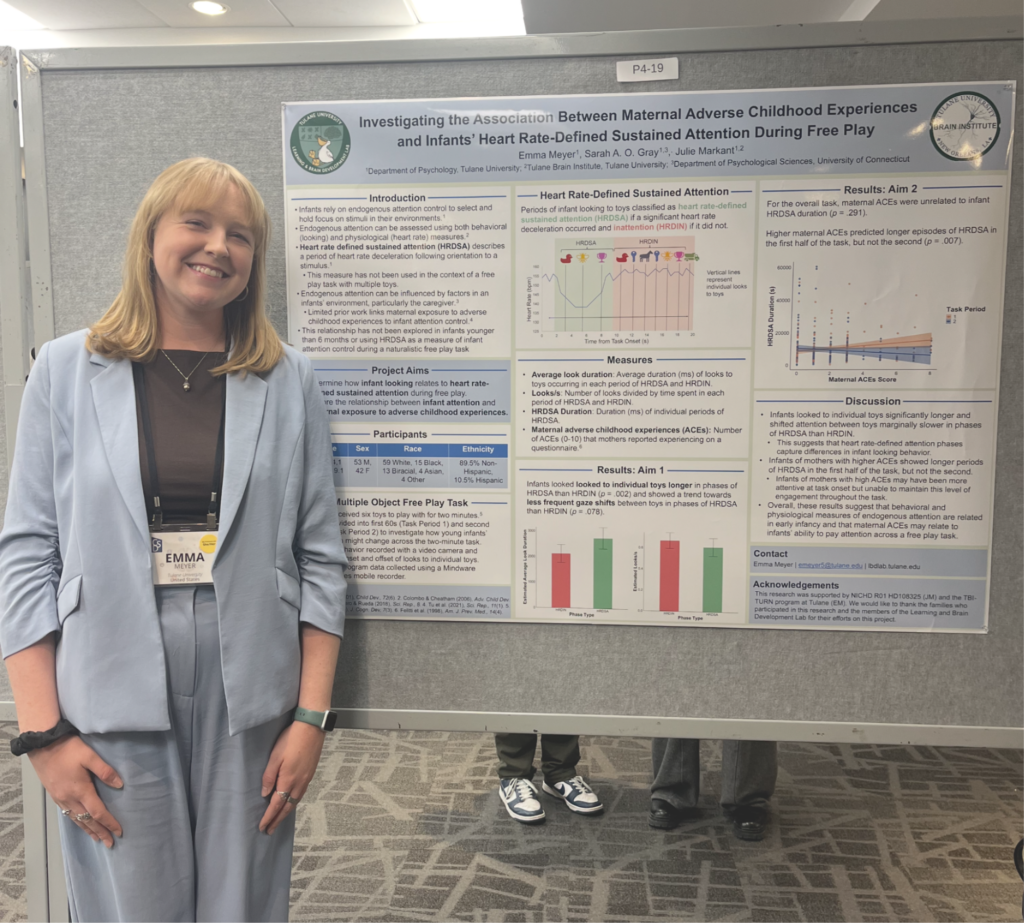
Maternal Adverse Childhood Experiences and Infant Sustained Attention During Free Play

Infants of mothers who reported higher exposure to ACEs showed longer periods of heart rate-defined sustained attention in the first half of a free play task, but not the second.
This suggests that infants of high ACEs mothers may be more attentive at the onset of the task but unable to sustain this level of attention throughout the entire task.

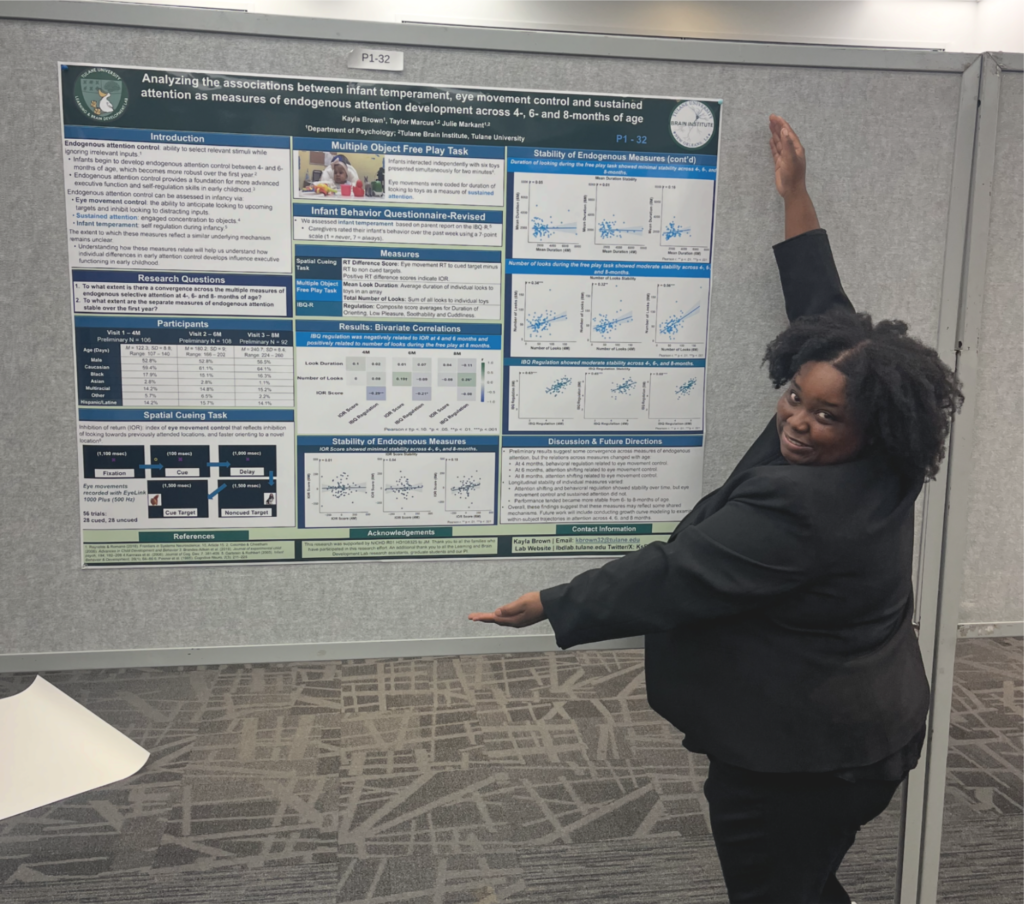
Relating Measures of Infant Endogenous Attention Control at 4-, 6-, and 8-Months Old

At 4 and 6 months, infants’ self-regulation was related to their eye movement control. However, by 8 months these attention skills were no longer closely connected. This suggests that early attention develops in multiple ways over time, rather than as one single skill.

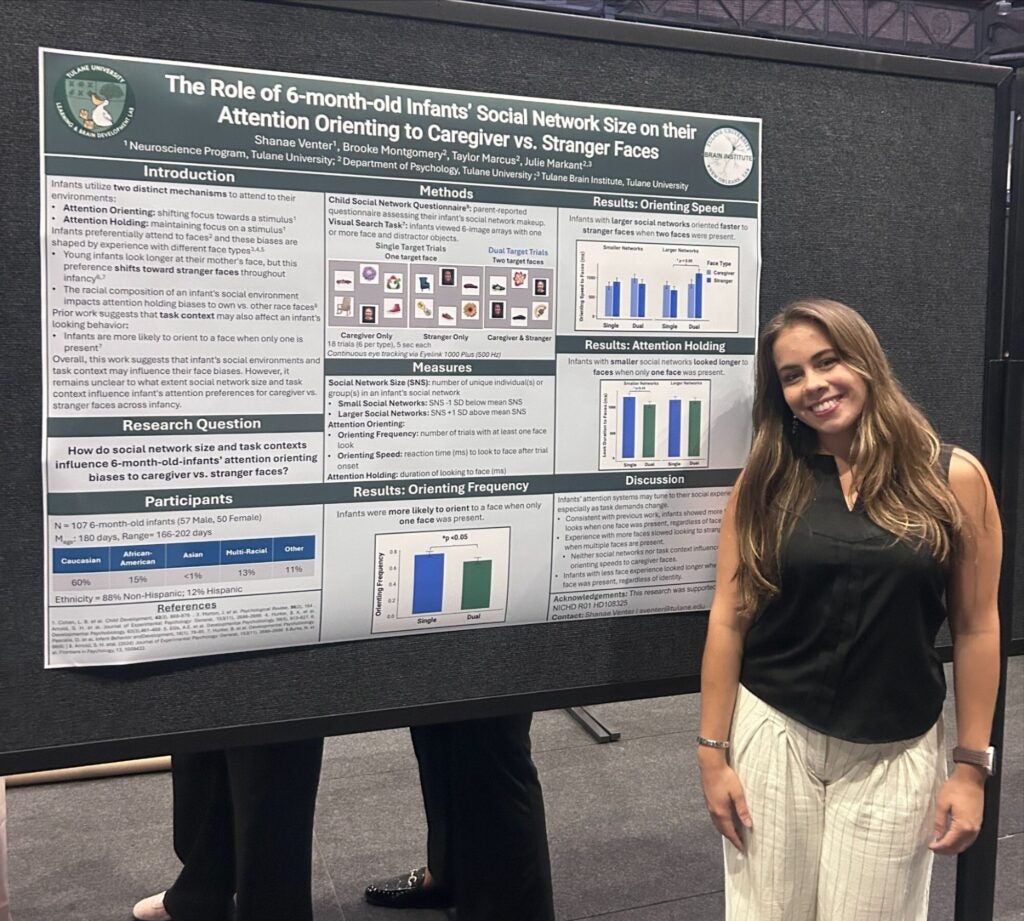
Effects of Social Network Size on Attention to Stranger vs Caregiver Faces

6-month old infants with larger social networks located stranger faces slower when two faces were present compared to when one face was present.
 
This suggests that both task context and infants’ experience with faces may affect their developing attention biases to faces.

Shanae Venter presented these findings at the NTC Spring Undergraduate Poster Session and won Best Use of Data!

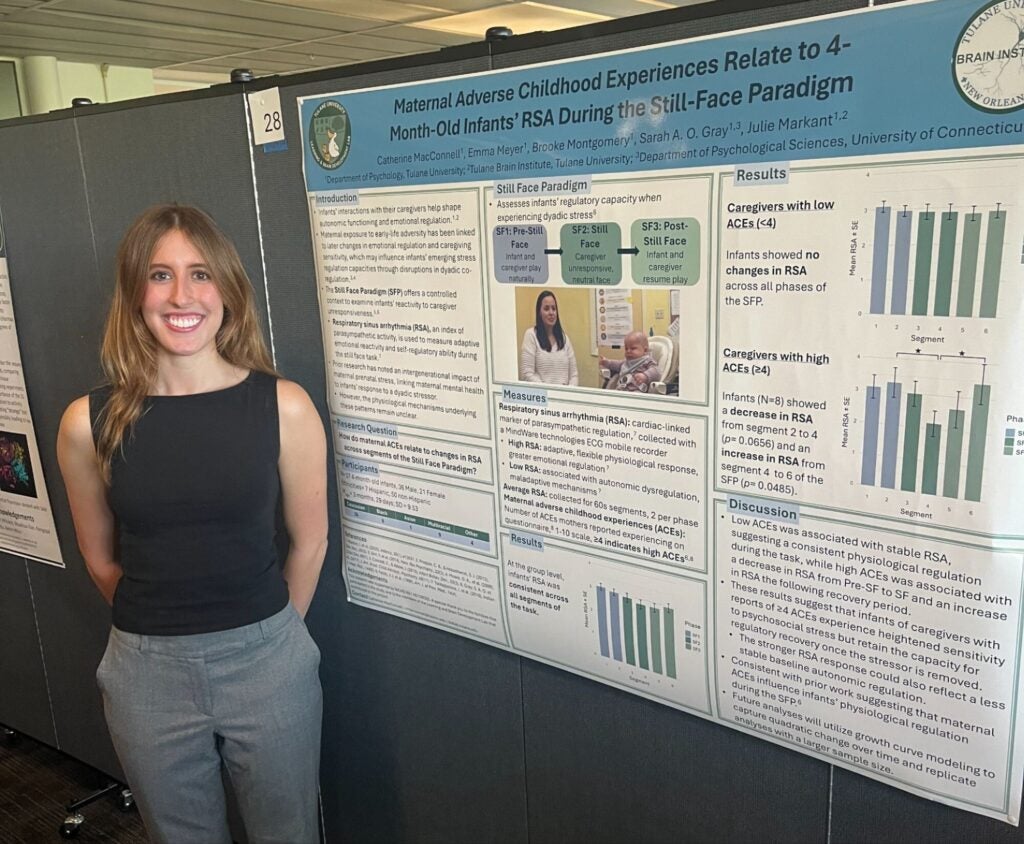
Maternal Adverse Childhood Experiences and Infant Physiological Regulation During Stress

Infants whose caregivers reported fewer stressful experiences showed stable physiological regulation throughout a parent-child interaction task. Babies whose caregivers reported more early adversity showed larger changes in physiological regulation but were able to recover after the stressful moment.

Catherine MacConnell presented these findings and won an award for School of Science and Engineering Best Poster at the Tulane Research, Innovation, and Creativity Summit!

Children's Learning from Multisensory Lessons

This study explored how children learn from online lessons containing auditory information, visual information, or both.

When there was only auditory information in the lesson, younger children with strong selective attention and older children with weak selective attention benefited from relevant context. Younger children learned more from visual and audiovisual lessons, while older children relied most on auditory information.

Children with stronger selective attention skills tended to have stronger working memory abilities. Older children and children with stronger selective attention skills learned more from multisensory science lessons. Working memory was unrelated to learning from these multisensory lessons.

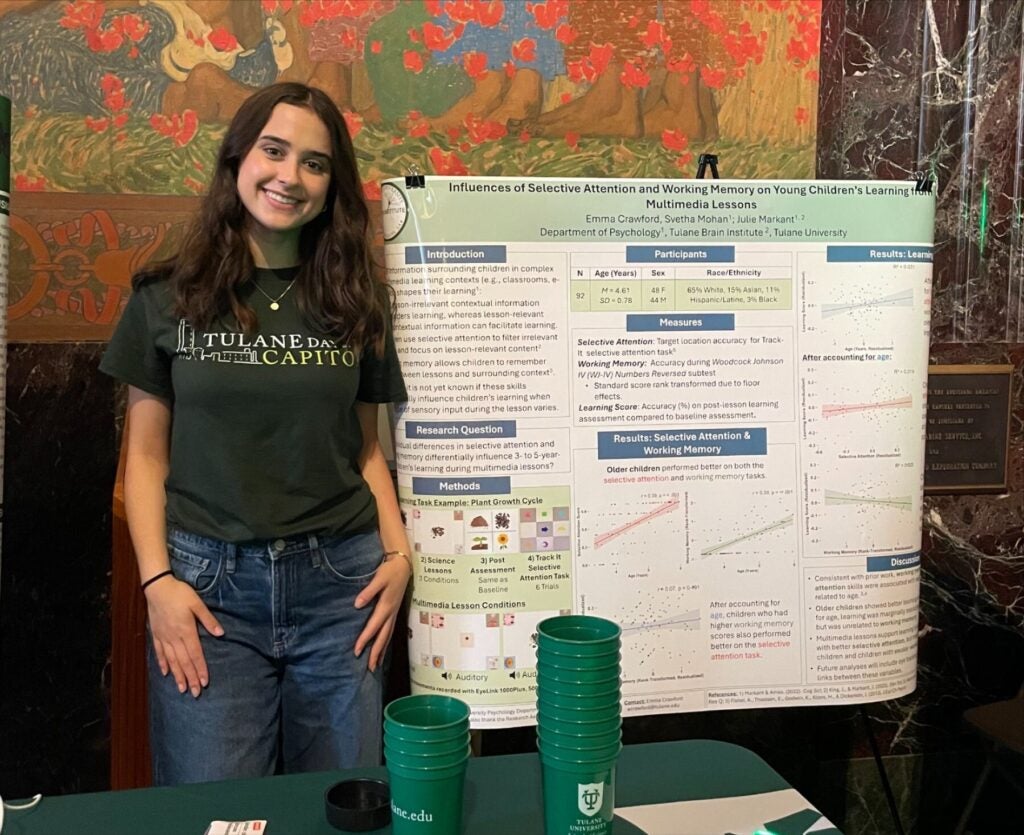
Emma Crawford won Best Overall Presentation at the School of Science and Engineering Undergraduate Poster Session and Most Visually Appealing at the NTC Spring Undergraduate Poster Session for her presentations of these findings!

Thank you to the families that have made these discoveries possible! 🧠🍼🌊

 Find the full projects with more info on these findings: 

Want to learn more about participation?

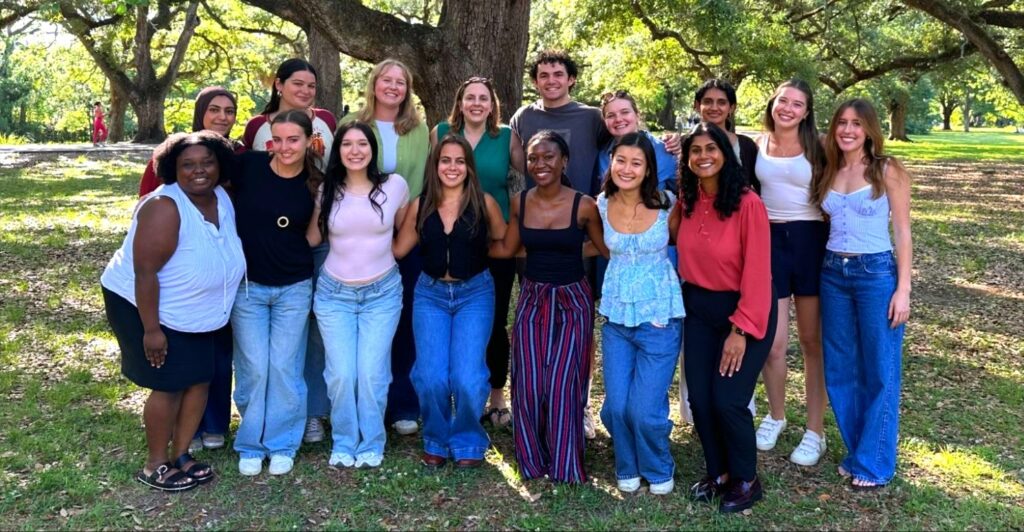
🎉Celebrating our Krewe!🎉

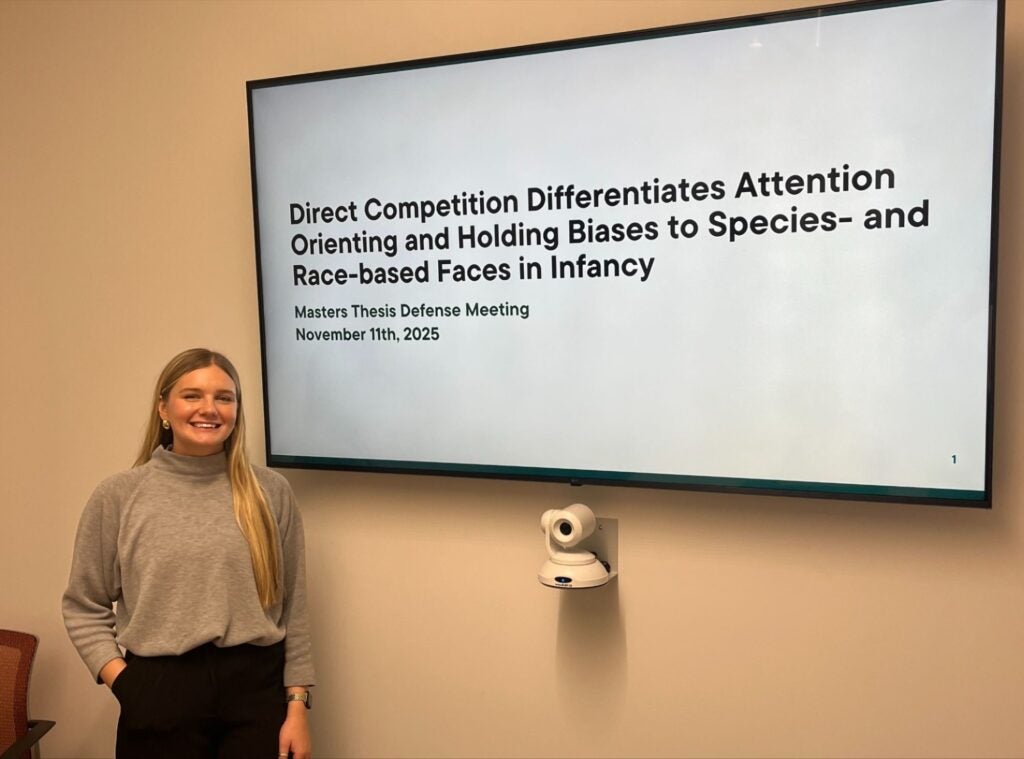
Last fall, our Ph.D. student Brooke Montgomery successfully defended her Master’s thesis! Brooke’s thesis explored how infants pay attention to own-race, other-race, and monkey faces.

Congratulations, Brooke!

Undergraduate research assistant Emma Crawford presented findings from the lab to Louisiana state legislators at Tulane Day at the Capitol!

The LBD Lab was recently featured in the Tulanian, Tulane’s alumni magazine! Check out the article and video feature here:

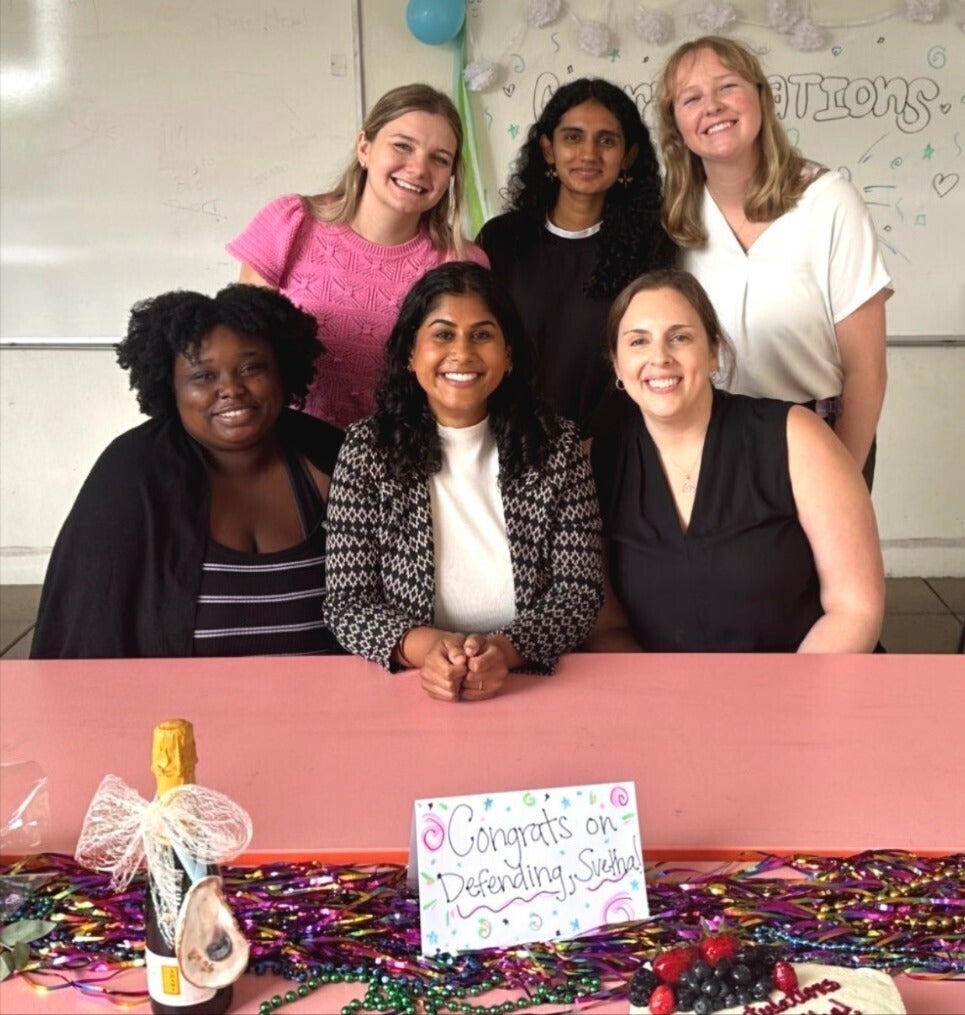
School Psychology Ph.D. candidate Svetha Mohan successfully defended her dissertation! Svetha’s dissertation explored how children learn during online lessons and reflects 5 years of hard work and decidation to the lab.

Svetha will complete a year-long internship in integrated primary care before completing her Ph.D in School Psychology.
We are so proud of you, Svetha!
 

⚜️ In the Community ⚜️

We had the honor of attending the annual SVDP Baby Shower! The Society of St. Vincent de Paul hosts this annual shower in collaboration with their Nourishing Louisiana program to support expecting parents by providing baby supplies and resources.

You can often catch us at the Louisiana Children’s Museum with educational coloring sheets and fun crafts! LCM hosts many engaging events for curious minds and adventurous hearts.

The LBD Lab frequently attends the Cresent City Farmer’s Market, now hosted every Tuesday at the Batture, Thursday at the Lafitte Greenway, and Sunday in City Park. The market features fresh, healthy foods made in our community.

We’re incredibly grateful for our community partners and all they do!

Click below to check out our list of family-friendly activities, services, and resources in the New Orleans area!

504-862-3312 lbdlab@tulane.edu