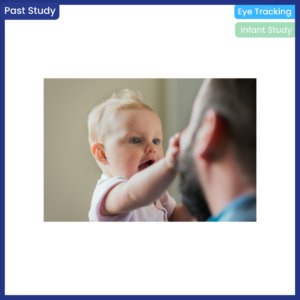

Infant Scanning & Emotional Faces
How infants explore faces tells us a lot about how they learn from people and begin to read emotional cues. These studies use eye-tracking and biology to reveal how very young babies visually sample faces and how individual differences in attention come from both experience and neural development.

Genetics and Early Attention
Ages: ~7 month-olds
Infants differ in how they allocate visual attention, and part of that difference can be traced to variation in genes that regulate brain chemistry. This study looked at a common genetic variant of the COMT gene — which affects dopamine, a chemical key for attention — and found that infants with different versions of the gene showed different patterns of spatial attention and flexibility. The work helps explain why some babies are more exploratory and adaptable in what they look at, connecting early brain biology to the way infants scan the world.

Genetics and Early Attention
Ages: ~7 month-olds
Infants differ in how they allocate visual attention, and part of that difference can be traced to variation in genes that regulate brain chemistry. This study looked at a common genetic variant of the COMT gene — which affects dopamine, a chemical key for attention — and found that infants with different versions of the gene showed different patterns of spatial attention and flexibility. The work helps explain why some babies are more exploratory and adaptable in what they look at, connecting early brain biology to the way infants scan the world.
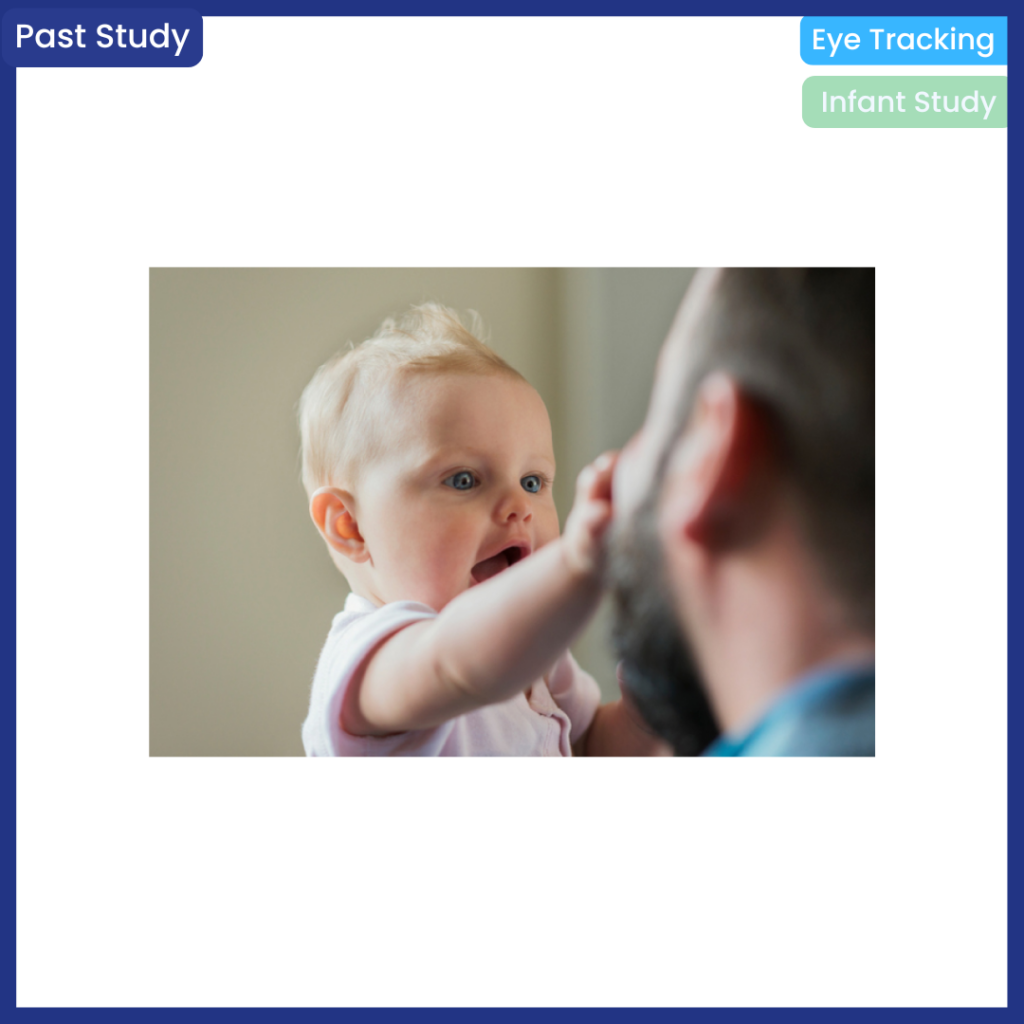
Infant orientation to specific facial features
Ages: 3-9 month-olds
Babies don’t just see faces — they sample them. This study used dynamic, socially engaging videos to see what features babies focus on at different ages. Younger infants (about 3–4 months) spent similar time looking at the eyes and mouth, gathering broad social and communicative cues. By around 9 months, babies shifted their gaze more to the eyes than the mouth, suggesting a developmental change in what information they prioritize from faces. These patterns reflect systematic shifts in how infants visually explore emotionally meaningful face displays as they grow.