





Learning and Brain Development Lab

LBD Lab Newsletter

Fall 2025 Newsletter

Thank you for being a part of the LBD Lab 

community!

Families like yours make our research possible!

Let us know if your family has grown!

If you’re pregnant, have a new child, or if any of your contact 

information has changed, let us know! We’re always starting new 

studies for children of all ages, and we can keep you updated on 

exciting research opportunities for your family as they become available.

Curious about what we've discovered?

If your family has been a part of our research in the past several years, read on to see the discoveries your child has made possible!

We’re also excited to share what we’ve been up to in the community and some exciting awards and achievements from our team.

Exploring Infants' First Year

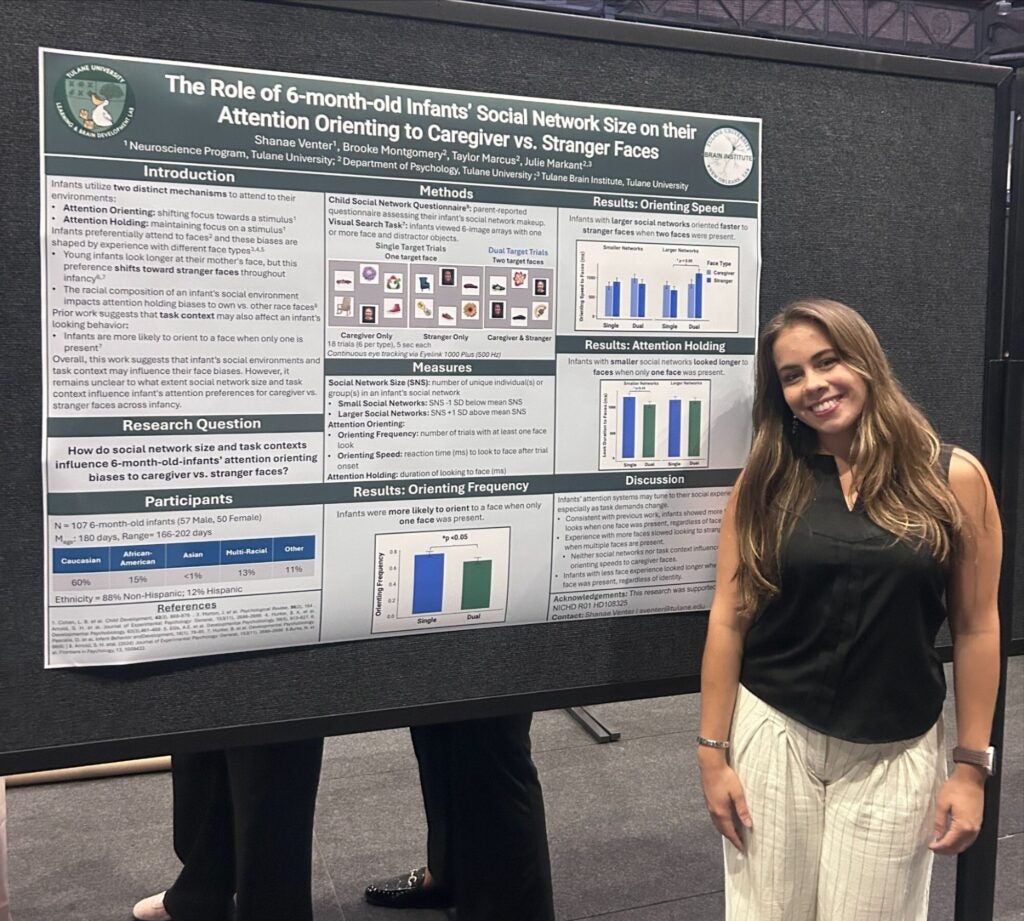
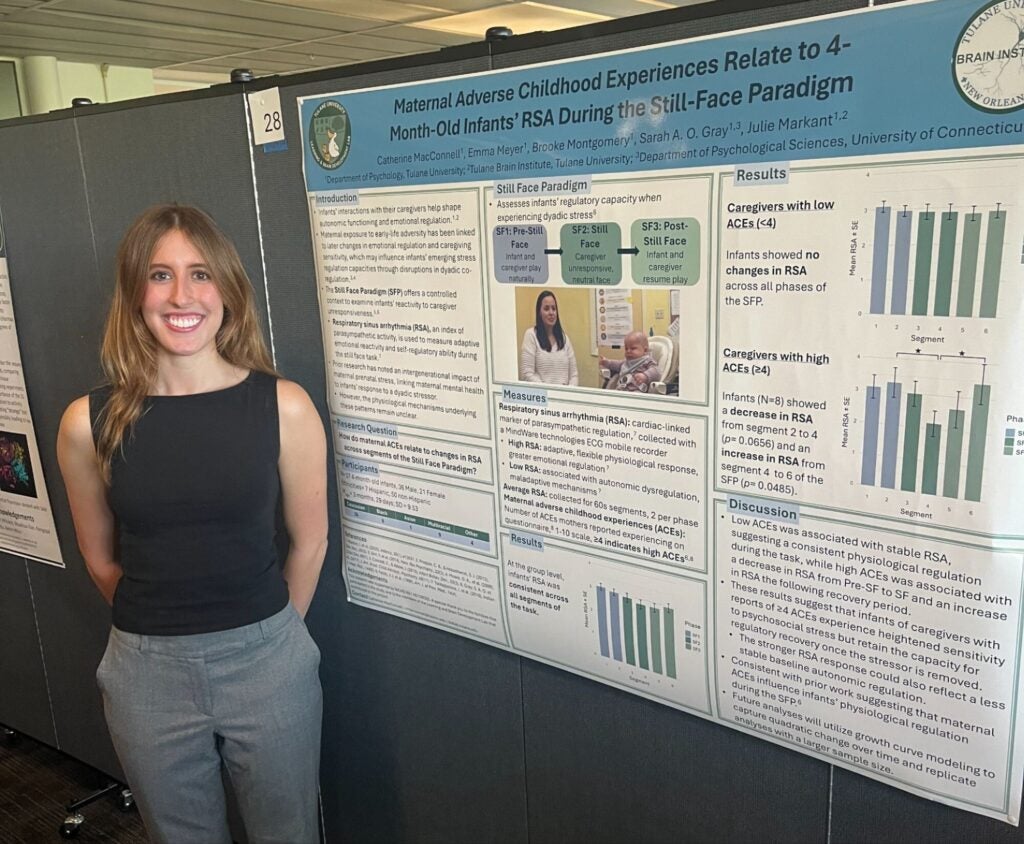
This ongoing study explores how infants’ attention to their caregivers changes across the first year of life and how factors such as selective attention, social network size, and maternal experiences relate to the development of infants’ attention biases.
 
We’re excited to share some preliminary findings from this 
ongoing project!

Household Size Influences Early Attention Biases

8-month old infants with larger household sizes spent less time looking at stranger faces compared to caregiver faces.
 
This suggests that the number of people living at home with infants may affect their developing attention biases to faces.

Optimizing Measures of Infant Attention Control

4-month infants with a greater ability to focus on relevant information and filter distractions held their attention on toys for shorter durations during play.

This suggests that different measures of infant attention control may be related as early as 4 months of age.

Infant Attention to Different Face Types

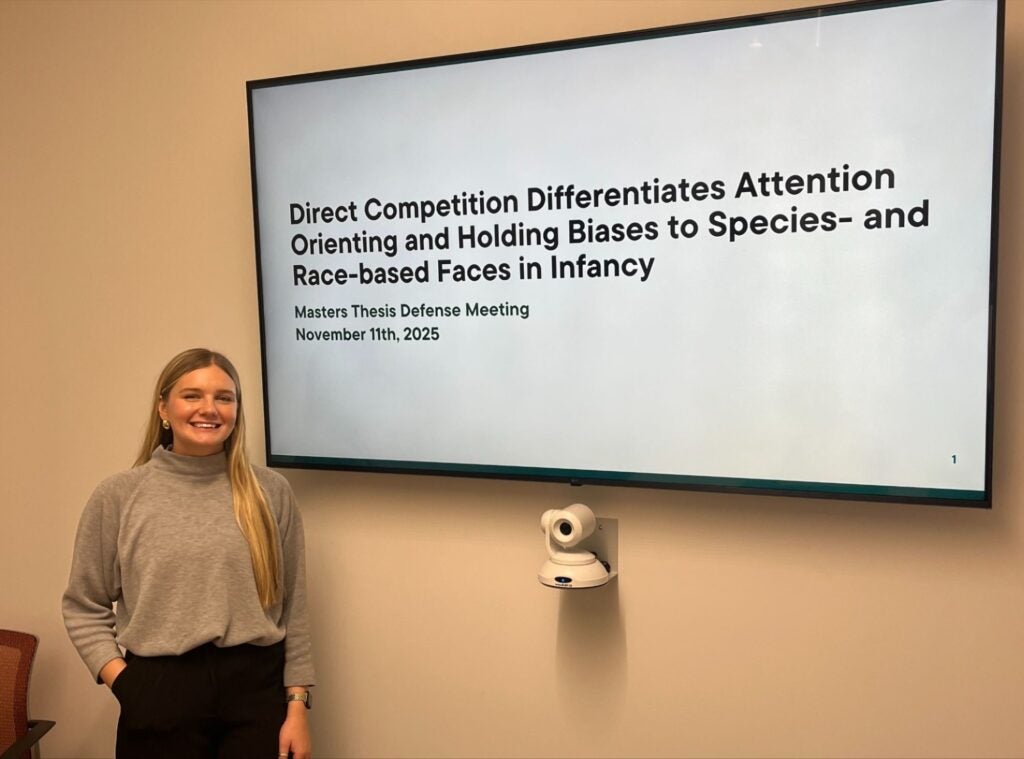
This study investigated how infants pay attention to different kinds of faces: own-race, other-race, and monkey faces.

Infants looked at human faces more frequently than monkey faces. When two faces were present, infants both found human faces faster and looked at human faces longer than monkey faces.

This suggests that infants’ experiences with faces may affect their developing attention biases.

Children Learn More from Audiovisual Lessons

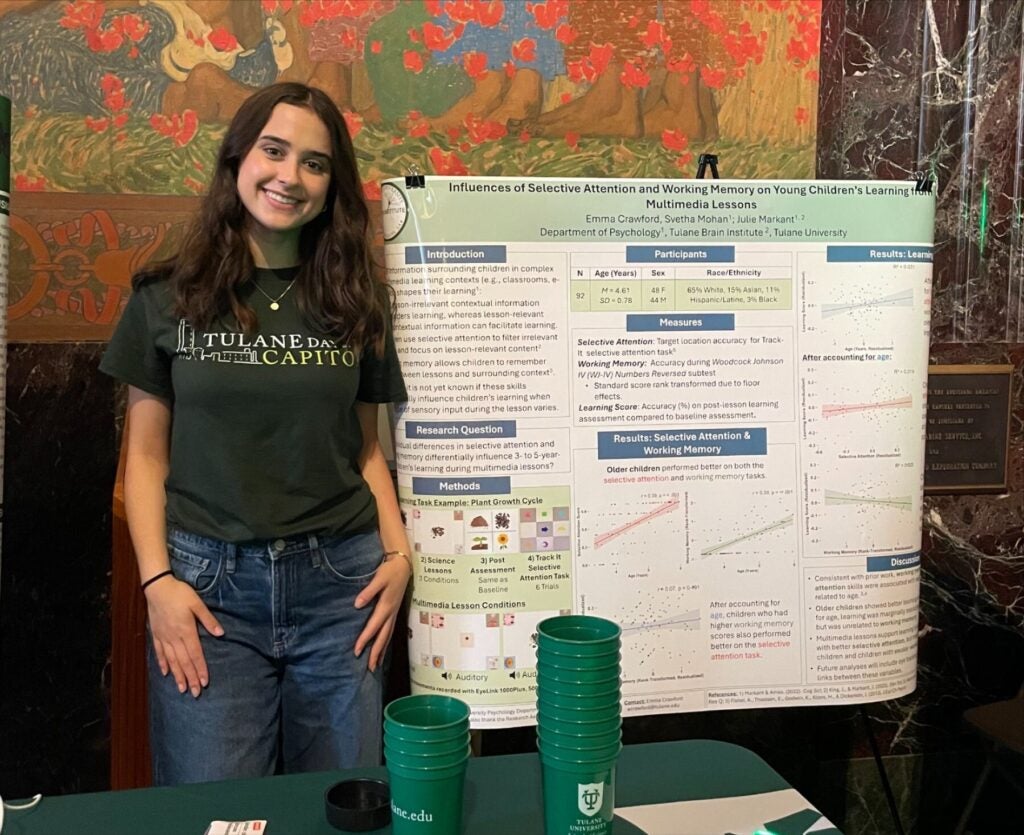
This study explores how 3- to 5-year-old children learn from different types of information during computer-based lessons.

Children learned the most from lessons containing audiovisual information compared to lessons containing only auditory or only visual information. 

This suggests that combining related auditory and visual lesson information may best support young children’s learning.

Thank you to the families that have made these discoveries possible! 🧠🍼🌊

 Find the full projects with more info on these findings: 

Want to learn more about participation?

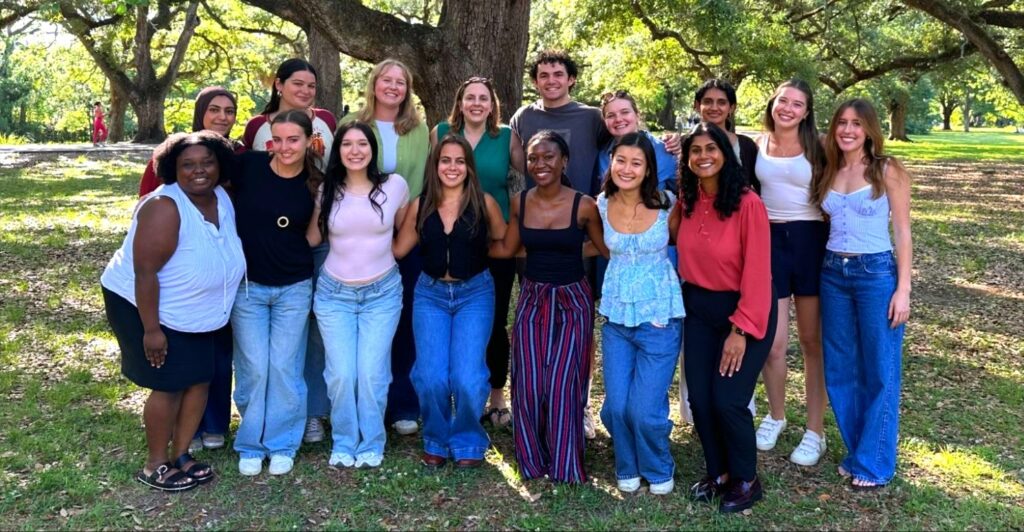
🎉 Celebrating Our Krewe! 🎉

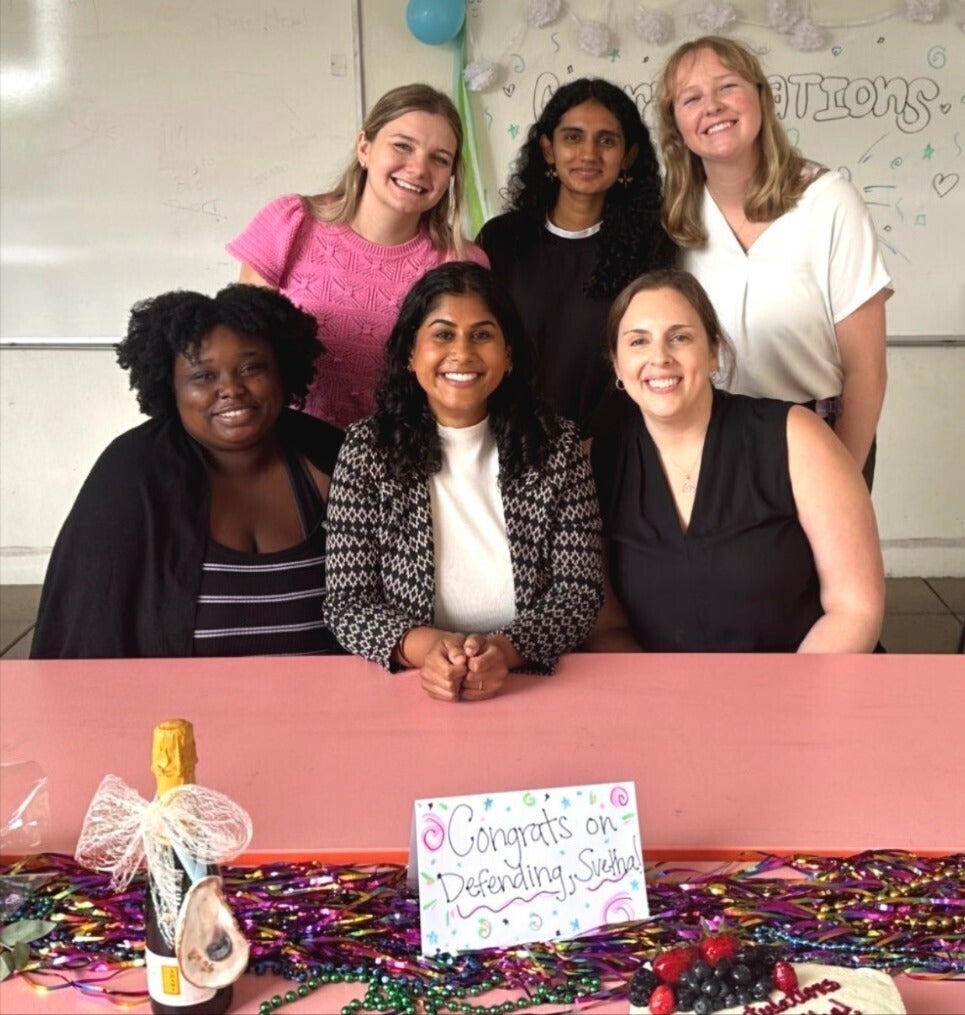
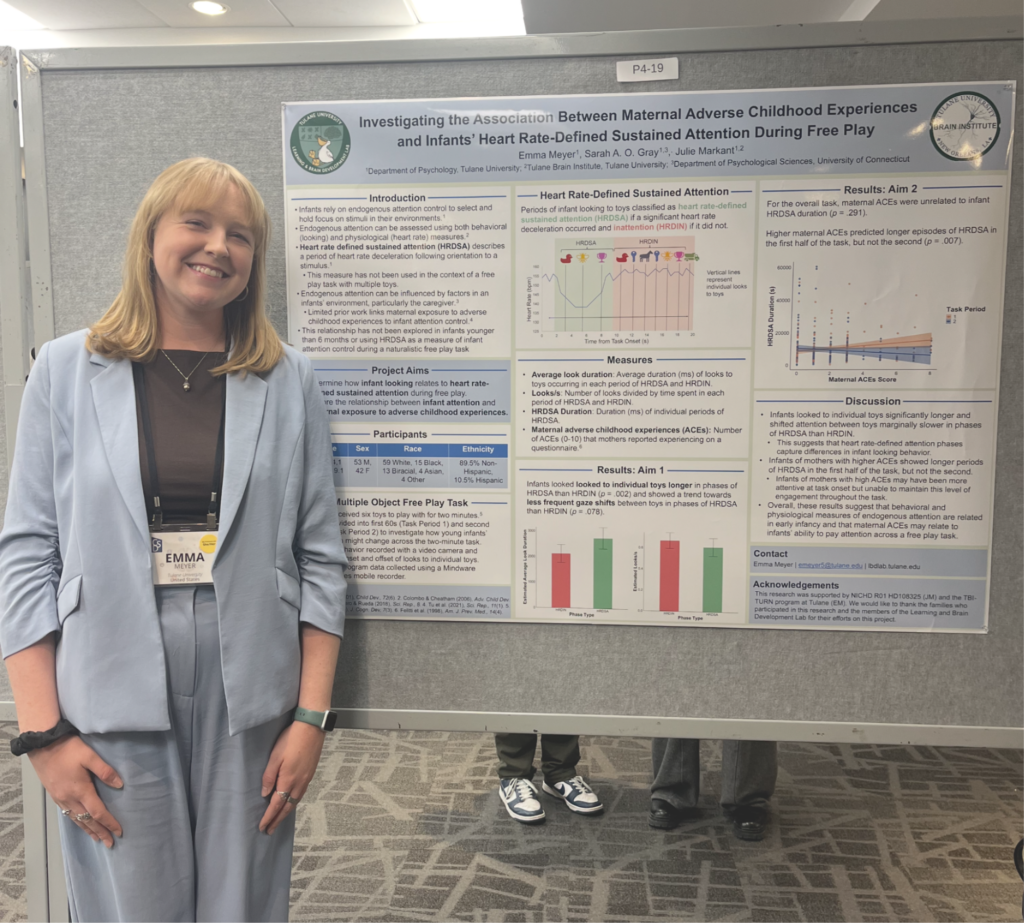
This spring, seven of our incredible lab members received awards from the Department of Psychology!

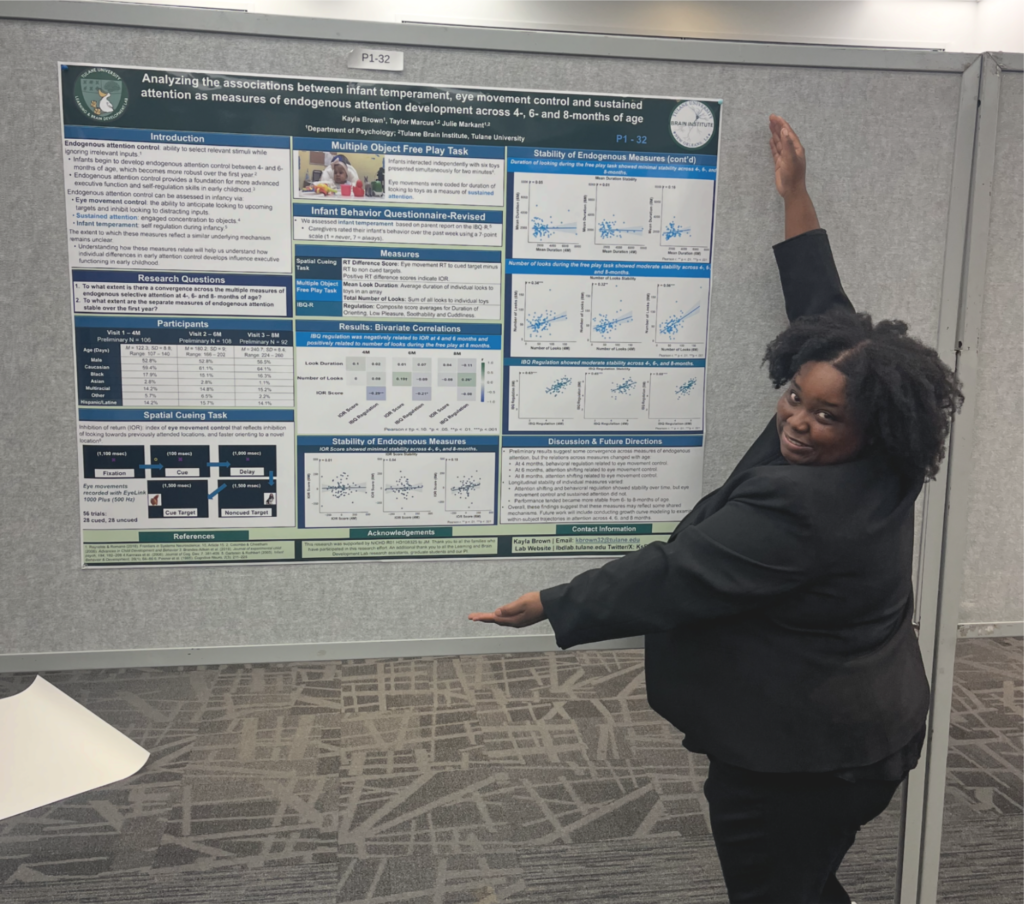
Former graduate student Taylor Marcus successfully defended her dissertation and earned her Ph.D. in Neuroscience! Congratulations Dr. Marcus!

…and some lab members are making big moves!
We are so proud of our recent graduates:
Kasey Ehrenreich
B.S. in Psychology
Psychology Master’s Student at American University
Zoe Sanders
B.S. in Psychology
Research Assistant with the Neurocognitive Development Lab at the University of Maryland
Maira Ansari
B.S. in Psychology and Sociology
Psychology Master’s Student at Tulane University
Emma Meyer
B.S. in Psychology and Neuroscience
Recruitment Coordinator with the Learning and Brain Development Lab at Tulane University
Clare McIntyre
B.S. in Neuroscience
Fulbright US Scholar studying in Santiago, Chile
Alyssa Alperstein
B.S. in Psychology
School Psychology Ph.D. Student at the University of Florida
Makenzie Soto
B.S. in Neuroscience and B.A. in Sexuality & Gender Studies
Research Coordinator with the Early Social Development Lab at the University of South Carolina
Taylor Marcus
Ph.D. in Neuroscience
Postdoctoral Scholar in the Social Memory Lab at Tulane University

The LBD Lab Turns Ten!

2025 marks ten years since Dr. Julie Markant joined the Tulane community and founded the Learning and Brain Development Lab.

Where it all started…

In 2015, Dr. Markant joined Tulane University’s Department of Psychology as an Assistant Professor. She carried her postdoctoral research from Brown University and founded the Learning and Brain Development Lab.

Where we are today…

As of 2025, the LBD Lab has fostered many classes of research assistants who share Dr. Markant’s passion for developmental science. We’ve been able to work with so many amazing community members in the Greater New Orleans area and beyond!

Thank you to Dr. Markant and the families who continue to make our research possible!

⚜️ In the Community ⚜️

We had the honor of attending the second annual One Happy Mama Block Party! This community baby shower is a part of Black Maternal Health Week, which brings donations, awareness, and support to families in need.

You can often catch us at the Louisiana Children’s Museum with educational coloring sheets and fun crafts! LCM hosts many engaging events for curious minds and adventurous hearts.

Our lab is also welcoming families from across the lake! At the Northshore Birth Options Birth Fair, we got to meet local businesses dedicated to providing everything a new family could need.

The LBD Lab frequently attends the Cresent City Farmer’s Market, now hosted every Sunday in City Park. This local treasure features fresh, healthy foods made in our community. The market accepts EBT/SNAP and participates in WIC.

We’re incredibly grateful for our community partners and all they do!

Click below to check out our list of family-friendly activities, services, and resources in the New Orleans area!

504-862-3312 lbdlab@tulane.edu